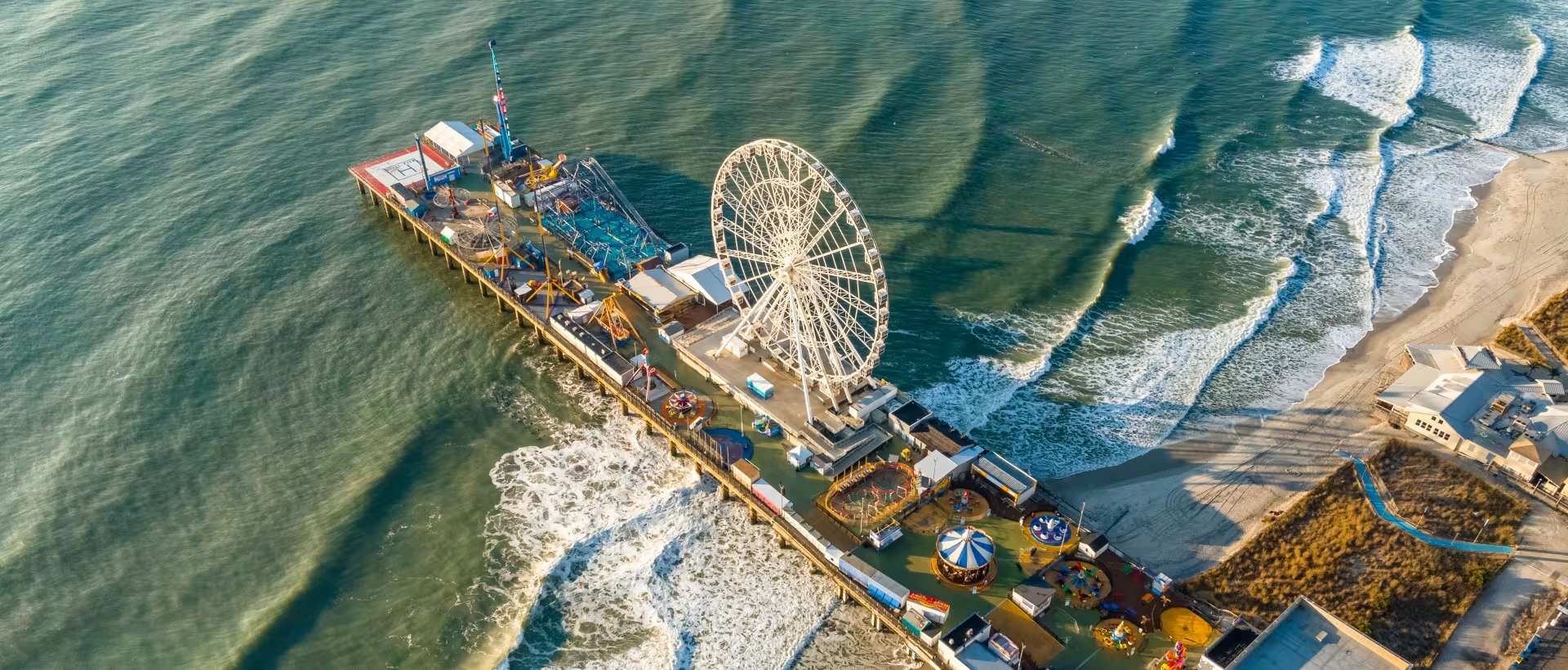
Background Atlantic City is a traditional resort city located on the southeastern coast of New Jersey. Historically, the city evolved into a regional beach destination connected to the larger Northeast and Mid-Atlantic markets—particularly Philadelphia and New York. Today, Atlantic City remains a tourism hub, drawing visitors to its beaches, boardwalk, […]
Recent Blog Posts
Reconnecting the Creeks of Barranquilla: Sustainable Urban Drainage for Stormwater and Wastewater
Barranquilla is a city that floods on top of a river. Every wet season, runoff overwhelms streets that have no real stormwater infrastructure and the same creeks that carry that runoff are also the city’s de facto sewers, with only 17% of wastewater actually treated. This post proposes Sustainable Urban Drainage Systems along the existing creek corridors as one intervention for both.
A Hybrid Future for Halifax, NS, Canada: Integrating Decentralized Wastewater System for Resiliency
A stark reminder that even with modern, expensive treatment plants, Halifax’s system remains dangerously vulnerable. Halifax’s wastewater system remains vulnerable because large flows depend on a centralized network of trunk sewers and pump stations. Climate change increases this risk: extreme rainfall drives higher wet-weather volumes, while sea-level rise, high tides, […]
From Nile Dependence to Fit-for-Purpose Reuse: A Water Strategy for Alexandria, Egypt
Overview Alexandria, Egypt is a coastal city shaped by water but constrained by freshwater scarcity. Located on the Mediterranean coast at the western edge of the Nile Delta, Alexandria depends overwhelmingly on Nile-derived surface water. This dependence creates a fragile urban water system. Freshwater must travel through canal infrastructure before […]
Addressing Flooding with Regional Planning in Chelsea, MA
Introduction Chelsea, Massachusetts is located on Boston Harbor along the northern banks of the Mystic River. Mill Creek and the Chelsea River bound the city in the North and East, respectively. The city’s geography makes it particularly vulnerable to coastal storm surges and sea level rise as well as pluvial […]
Decentralizing Water in Brisbane: A Household Greywater Strategy for Urban Resilience
Overview and Background Few cities are shaped by water as profoundly, or as paradoxically, as Brisbane. The city exists in a constant cycle of extremes: flood and drought, abundance and scarcity, panic and complacency. In some years, water arrives with devastating force, swallowing streets, homes, and entire neighborhoods. In others, […]
Decentralized and Sustainable Drinking Water System for Kibera, Nairobi
Executive Summary Kibera faces interconnected water challenges shaped by limited infrastructure, informal settlement, and unequal service provision. Water scarcity, poor water quality, flooding and fragmented governance structure all reinforce each other, making everyday access to safe and affordable water difficult for many residents. In response, this proposal presents an integrated […]
Modular Management: Water System Redundancy and Resilience in Asheville, NC
Western North Carolina faces several large challenges to modernize its water infrastructure and secure auxiliary systems that mitigate harm in the event of failure. Hurricane Helene’s impact displayed severe deficiencies in regional water management; specifically, in the region’s largest city of Asheville, water access was unavailable to some communities for […]
Water Sovereignty & Access in the Navajo Nation
INTRODUCTION The Navajo Nation, whose initial borders were created in 1868 by a treaty with the United States government, is home to 170,000 people—more than half of the tribe’s registered members.i There are several small cities within the reservation; however, much of the area is rural in character. Through the creation of the reservation’s […]
Integrated Solutions for Urban Water Resilience: Tianjin’s Path Forward
Overview The blog explores Tianjin’s comprehensive water management approach, detailing its water supply systems, infrastructure, and pricing mechanisms. The city faces complex water challenges with climate change, including water scarcity, pluvial flooding, land subsidence, and water pollution. Historically reliant on rivers like the Haihe and now dependent on large-scale water […]